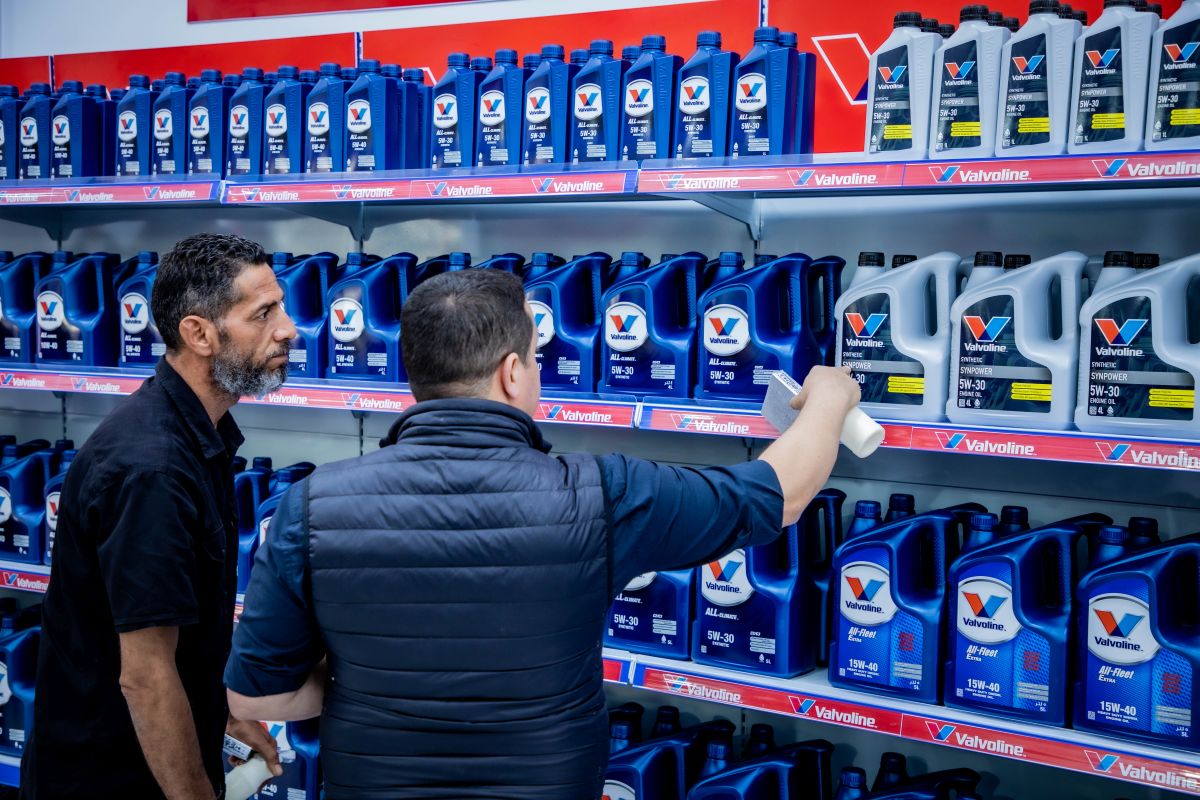
Engine oil containers display a set of standard codes and abbreviations which represent a global scientific language used to define the oil’s properties, performance, and suitability for various engine types. Understanding these codes is essential for selecting the correct oil that ensures engine efficiency and longevity.
1. Viscosity Standard (SAE)
SAE stands for the Society of Automotive Engineers. This standard is used to determine oil viscosity at different temperatures.
- Cold-Weather Viscosity (Winter): In a rating like 5W-30, the number and letter 5W indicate the oil’s performance at low temperatures (where W stands for Winter). The smaller the number preceding the W (such as 0W or 5W), the faster and better the oil flows during cold starting, which minimizes wear.
- Hot-Weather Viscosity: The number 30 refers to the oil’s viscosity at the engine’s normal operating temperature (approximately 100 degrees Celsius). The higher this number, the thicker the oil is at high temperatures.
2. American Performance Classification (API)
API is an acronym for the American Petroleum Institute, a global classification system that defines the minimum performance and protection requirements for oils.
- Gasoline Engine Oils (S Code): This category is designated by the letter S (Service or Spark Ignition). The classification progresses alphabetically (such as SL, SM, SN, SP).
- API SP (The Latest): This classification offers advanced protection for modern turbocharged and direct-injection engines, featuring enhanced protection against timing chain wear and the phenomenon of Low-Speed Pre-Ignition (LSPI).
- Diesel Engine Oils (C Code): This category is designated by the letter C (Commercial or Compression Ignition).
- Modern Classifications: These include CK-4 for heavy-duty engines and FA-4, which is dedicated to some new, high-efficiency engines requiring low-viscosity oils to improve fuel economy.
3. European Performance Classification (ACEA)
ACEA is an acronym for the Association des Constructeurs Européens d’Automobiles (European Automobile Manufacturers’ Association). This system is typically stricter and more specialized than API, particularly concerning emission control systems.
- Category A/B (Passenger Cars): Dedicated to light-duty gasoline and diesel engines in passenger cars. This includes A3/B4 for high performance and extended drain intervals, and A5/B5 for fuel economy oils.
- Category C (Exhaust Protection): Dedicated to protecting exhaust after-treatment systems like the Diesel Particulate Filter (DPF).
- Low SAPS: Oils in the C category (such as C1 through C5) are characterized by their low content of Sulfated Ash, Phosphorus, and Sulfur (Low SAPS), which is essential to prevent damage and clogging of these sensitive systems.
- Category E (Heavy-Duty Engines): Dedicated to heavy-duty diesel engine oils used in trucks and commercial vehicles, designed for severe operating conditions and long running hours.
4. Manufacturer Approvals and Formulation
In addition to global classifications, oil properties are indicated by other terms and codes:
- Manufacturer Approvals (OEM): These are specific, proprietary tests set by the car manufacturers themselves (such as VW 504.00 or MB 229.5). Adhering to these specifications is often mandatory to maintain the vehicle’s warranty and ensure full compatibility with the engine design.
- Formulation: The term Fully Synthetic indicates that the oil is entirely synthetic and offers the best thermal stability and protection, Semi Synthetic refers to a blend of mineral and synthetic oils, and Mineral Oil refers to oil extracted directly from crude petroleum after refining.
The correct choice depends on the specific recommendations found in the vehicle’s owner’s manual, adhering to the SAE viscosity standard and the appropriate API/ACEA performance classification.