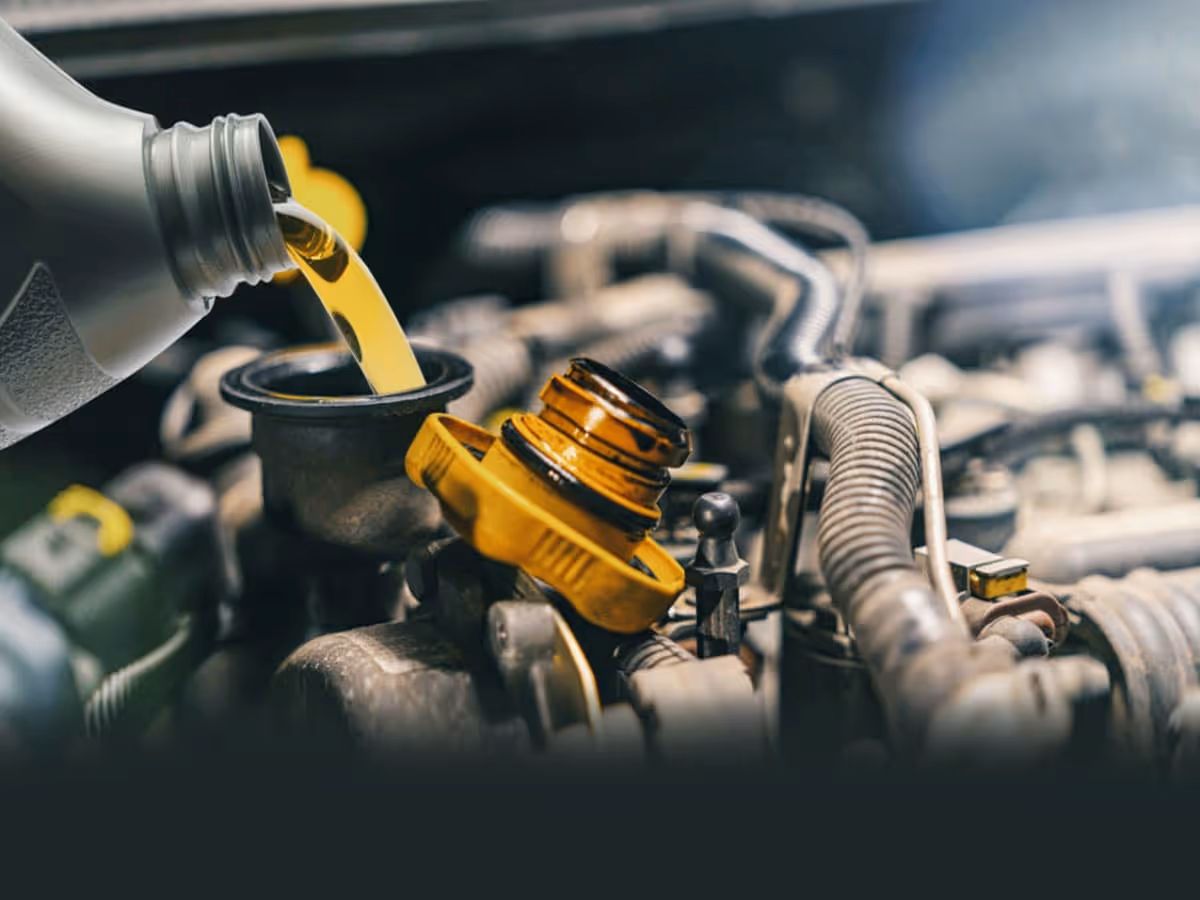
This article aims to dispel widely circulated misconceptions regarding engine oils and coolants, providing the scientific and practical facts that ensure optimal vehicle performance and prolong its lifespan.
1. Viscosity in Hot Regions: A Misunderstanding of the Numbers
Oil viscosity is one of the most misunderstood aspects, particularly in hot regions. The prevalent belief is that using an oil with a higher winter viscosity rating (W), such as 10W-30 instead of 5W-30, offers better protection during the hot summer. This belief is false; the number following the “W” (in this case, “30”) represents the oil’s viscosity at the standard engine operating temperature, which is the same in both scenarios. The difference lies in the first number (5W or 10W), which indicates how easily the oil flows during a cold start. An oil with a lower cold viscosity (5W) reaches engine parts faster, minimizing the wear that occurs in the first few seconds of operation.
2. Synthetic Oils: Not Exclusive to Sports Cars
A common myth suggests that Full Synthetic oils are reserved only for high-performance or sports vehicles. The reality is that the vast majority of modern vehicle manufacturers, including family and economy cars, now recommend synthetic oils. The benefits include the synthetic oil’s ability to resist thermal breakdown and oxidation for longer periods, in addition to maintaining engine cleanliness. Using this type of oil guarantees superior protection for modern, high-efficiency engines that operate under higher pressure and heat than older generations.
3. Oil Color: Does Black Mean Breakdown?
Many drivers associate the quick darkening of engine oil with an immediate need for replacement or believe that the oil is “burning” inside the engine. The truth is that one of the most vital functions of modern oil is cleaning, where chemical additives (dispersants and detergents) absorb combustion residue, carbon, and impurities. Therefore, oil turning black shortly after use is evidence that it is effectively performing its function in cleaning the engine and protecting internal parts from the buildup of these contaminants, and does not necessarily mean it has lost its lubricating properties.
4. Coolant: The Necessity of Periodic Replacement
Many mistakenly believe that engine coolant (Antifreeze/Coolant) is a substance that never needs changing, or that adding distilled water is sufficient to compensate for loss. Coolant is a complex chemical compound that provides three primary functions: freeze protection, raising the boiling point, and most importantly, corrosion and rust prevention within the cooling system. Over time (typically 3 to 5 years), the protective chemical inhibitors are consumed, and the fluid begins to lose its ability to shield metal components like the water pump and radiator from damage. Therefore, the complete periodic replacement of the fluid is essential to maintain the efficiency and longevity of the cooling system.
5. Change Intervals: Can Synthetic Oil Handle 10,000 km in “Severe Driving”?
Although synthetic oils are designed for extended mileage (reaching 10,000 km or more), a myth persists that this distance can be relied upon regardless of driving conditions. The reality is that the mileage stated in the owner’s manual or on the oil packaging usually applies to “normal driving conditions.” However, under Severe Driving Conditions—which include frequent driving in heavy traffic for extended periods, very short and repeated trips where the engine does not fully warm up, or driving in dusty, hot climates—the oil change interval must be significantly reduced. In these conditions, manufacturers may recommend cutting the suggested interval in half (e.g., from 10,000 km to 5,000 km) due to the extra stress placed on the oil.